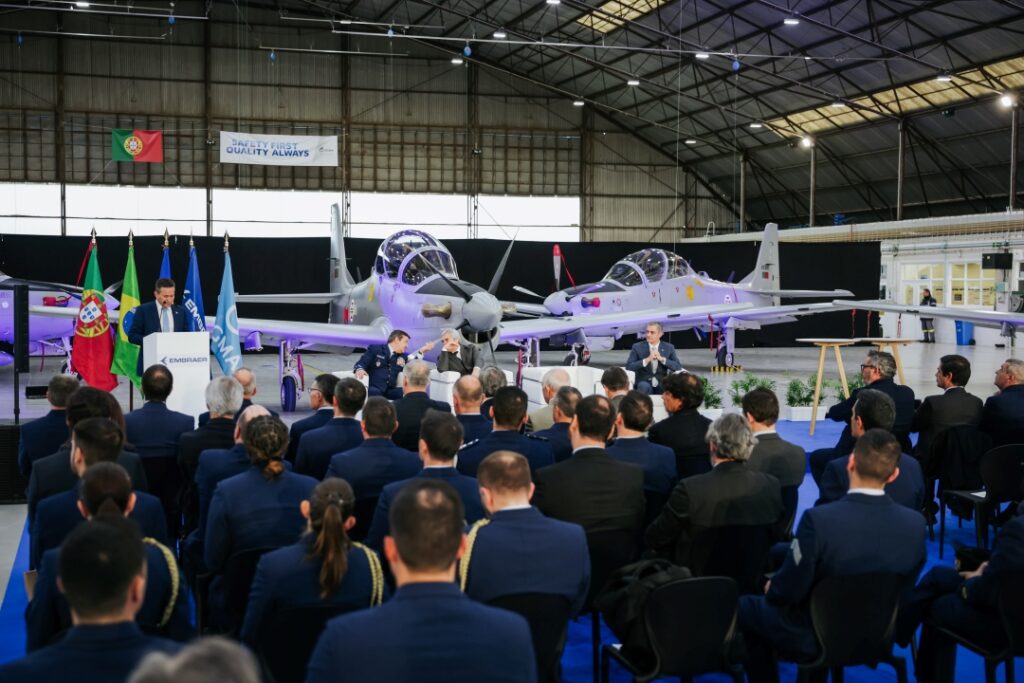

The Portuguese Air Force has officially taken delivery of the first five Embraer A-29N Super Tucano aircraft, marking a significant step in the nation’s military modernization efforts. The batch is part of a comprehensive €200 million agreement with the Brazilian aerospace giant for a total of 12 light attack and advanced training aircraft.
A ceremony celebrating the handover was held at the facilities of OGMA – Indústria Aeronáutica de Portugal S.A. in Alverca. The event was attended by senior Portuguese government and military officials, alongside executives from Embraer, underscoring the strategic importance of the acquisition for both parties.
In a statement, Embraer highlighted the rapid execution of the contract, noting the delivery comes just over a year after the acquisition agreement was finalized. This delivery formally introduces a versatile and modern platform into Portugal’s air fleet, enhancing its operational capabilities within the NATO framework.
A Strategic Partnership Deepens with European Production Hub in Sight
Beyond the delivery of the aircraft, the event signaled a deepening of the industrial partnership between Embraer and Portugal. During the ceremony, a Letter of Intent (LOI) was signed to explore establishing a final assembly line for the A-29N Super Tucano at the OGMA facility.
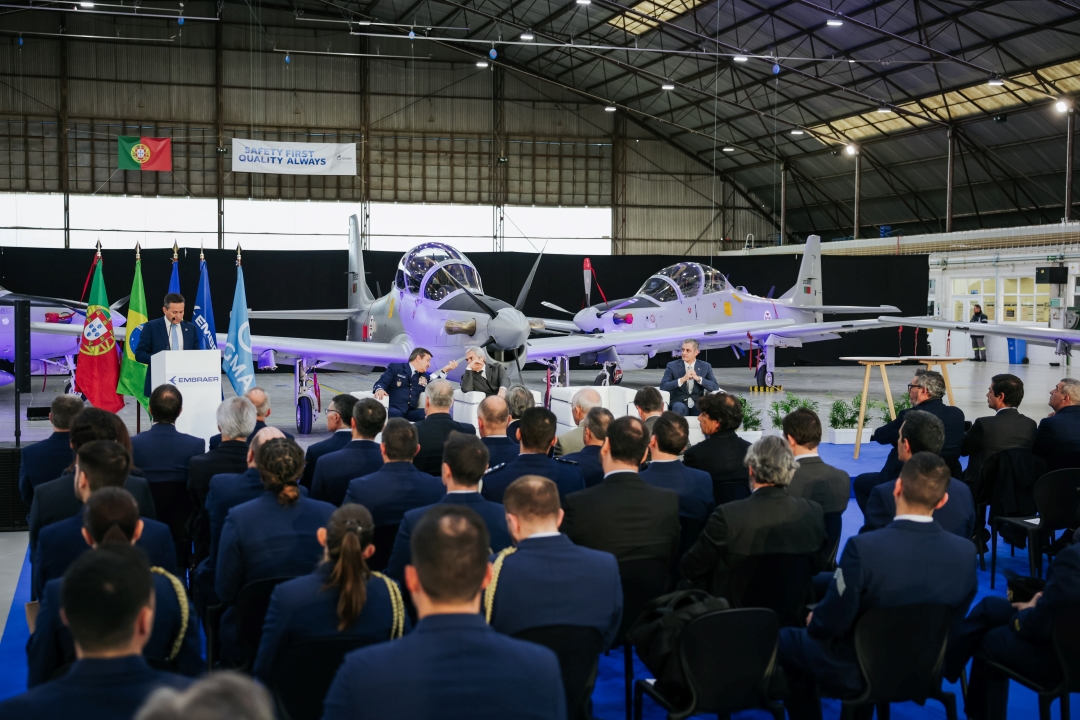
This move is particularly significant as Embraer holds a 65% majority stake in OGMA, with the Portuguese state retaining the other 35%. An assembly line in Portugal would position the country as a strategic hub for producing and supplying the NATO-configured aircraft to other European nations, leveraging government-to-government sales channels.
Bosco da Costa Junior, CEO of Embraer Defense & Security, emphasized the growing strategic importance of the aircraft in Europe. “There is growing interest in employing the A-29 for counter-UAS missions in Europe, and a potential assembly line in Portugal paves the way for the development of new business and broader cooperation with the Portuguese defense industry,” he stated.
Technical Profile: The A-29N Super Tucano
The A-29N is a bespoke variant of the highly successful EMB 314 Super Tucano, specifically configured to meet the operational standards and requirements of the North Atlantic Treaty Organization (NATO). This acquisition makes Portugal the first NATO country to operate this specific version.
NATO-Specific Enhancements
The “N” designation signifies crucial adaptations for seamless integration with allied forces. These modifications include advanced communication systems, a NATO-standard datalink for secure information sharing, and an avionics suite designed for full interoperability during joint missions. This ensures that the Portuguese Air Force can effectively operate the A-29N alongside assets from other NATO member states.
A Multi-Role Powerhouse
The Super Tucano is renowned for its versatility, ruggedness, and cost-effective performance across multiple mission profiles. Powered by a reliable Pratt & Whitney Canada PT6A turboprop engine, it can operate from short, unpaved runways, making it ideal for a wide range of environments.
Its primary roles include:
- Light Attack: Equipped with five hardpoints, it can carry over 1,500 kg of external ordnance, including precision-guided munitions, rockets, and air-to-ground missiles.
- Counter-Insurgency (COIN): Its long loiter time, robust airframe, and comprehensive sensor suite make it highly effective for surveillance and close air support.
- Advanced Pilot Training: The aircraft features a modern glass cockpit and handling characteristics that prepare pilots for advanced fighter jets.
- Armed Reconnaissance: It can be equipped with electro-optical/infrared (EO/IR) sensors and laser designators for intelligence, surveillance, and reconnaissance (ISR) missions.
A Proven Platform on the Global Stage
The delivery to Portugal further solidifies the Embraer A-29 Super Tucano’s position as a leading aircraft in its class. It is already in service with more than 20 air forces worldwide and has accumulated over 600,000 flight hours, with a significant portion of those in operational combat environments.
The aircraft’s adaptability is proving crucial in addressing modern security challenges. As noted by Embraer’s leadership, its capabilities are well-suited for counter-UAS (Unmanned Aerial Systems) missions. The Super Tucano’s ability to fly at lower speeds and altitudes for extended periods makes it an effective platform for detecting, tracking, and neutralizing hostile drones, a growing threat on today’s battlefield.
Portugal’s acquisition of the A-29N not only modernizes its own forces but also strengthens NATO’s collective capabilities by introducing a proven, interoperable, and highly flexible asset. The remaining seven aircraft from the order are expected to be delivered in the coming months, further bolstering the fleet.