
Swiss manufacturer JEKTA is marking a significant milestone in the development of its PHA-ZE 100 electric amphibious seaplane, revealing the first images of a 1:9 scale model as it advances its flight testing program in Italy. This step signals tangible progress for the ambitious zero-emissions aircraft, aiming to revolutionize regional air transport.
The Passenger Hydro Aircraft – Zero Emissions 100, or PHA-ZE 100, is being developed to meet a growing demand for sustainable and versatile connectivity. The recently unveiled subscale model is a crucial component of JEKTA’s strategy to validate and refine the aircraft’s design, bridging the gap between digital simulations and a full-scale prototype.
A Strategic Step in Aircraft Validation
The flight tests, currently underway in the skies over Italy, are designed to collect extensive aerodynamic and hydrodynamic data. The 1:9 scale model is not merely a visual representation; it is a sophisticated engineering tool. Its size is large enough to produce data that accurately reflects the flight characteristics and water-handling capabilities of the final, full-sized aircraft.
This data-driven approach allows JEKTA’s engineers to meticulously verify the information gathered from extensive computer modeling. By operating a physical model, the team can efficiently expand the flight envelope, test performance limits, and refine the aircraft’s configuration long before committing to the production of a full-scale prototype. This methodology is critical for de-risking the program and ensuring the final design is mature and optimized.
George Alafinov, CEO and co-founder of JEKTA, emphasized the importance of this phase. “The 1:9 scale model is large enough to provide data representative of the full-size aircraft, allowing us to efficiently expand the test envelope and verify the information we had already gathered through computer modeling,” he stated. “We will continue to refine the aircraft configuration based on findings from the model testing and feed back into our digital models, ensuring the maturity of the aircraft as we work towards introducing it to the global air transport network in 2030.”
Advanced Technology Meets Italian Aeronautical Legacy
Distributed Electric Propulsion and Modern Design
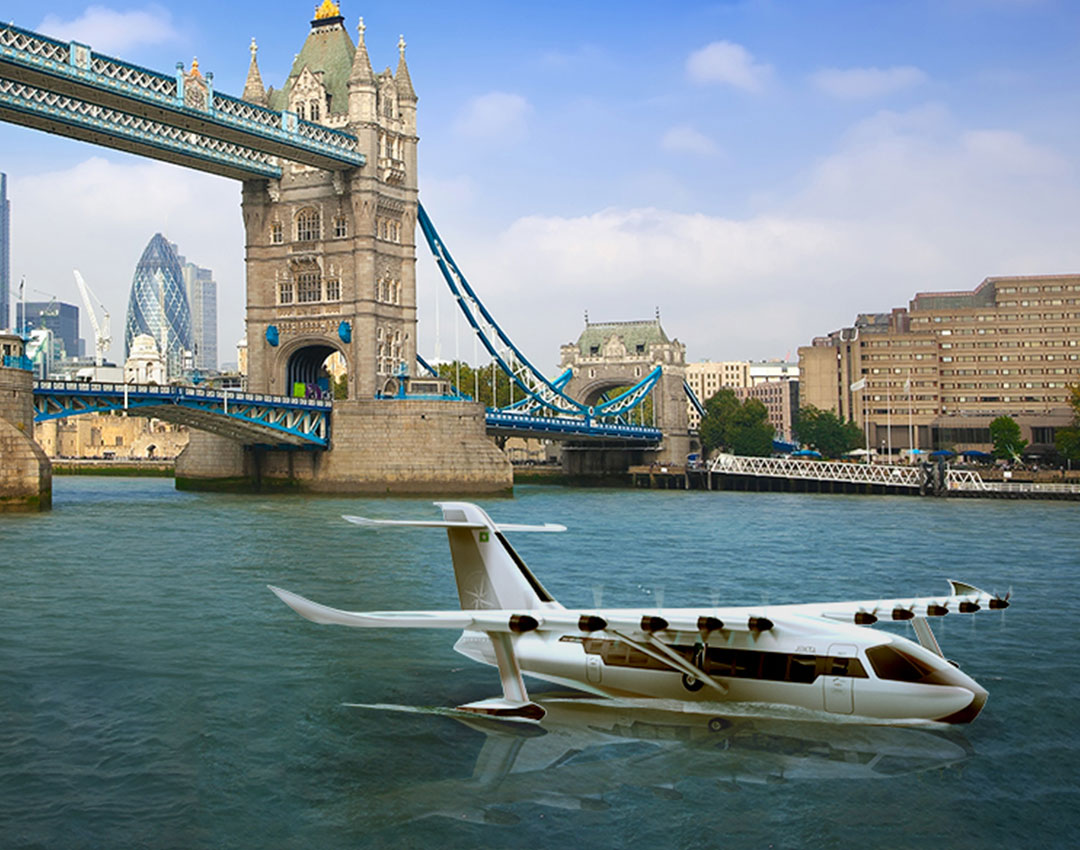
The PHA-ZE 100 scale model showcases several key technological features that define its innovative design. It is equipped with a distributed electric propulsion (DEP) system, featuring eight electric motors. This configuration enhances not only efficiency but also provides a high degree of redundancy and safety. DEP allows for improved airflow over the wings, potentially enabling short takeoff and landing (STOL) capabilities from both runways and water.
The aircraft’s sleek, aerodynamic profile is designed for optimal performance in both air and water. Furthermore, the design incorporates large panoramic windows for the cockpit and passenger cabin, promising an unparalleled travel experience with expansive views.
Inspired by a Rich Seaplane Heritage
The decision to conduct flight testing in Italy is a deliberate one. The nation has a celebrated history in the design, manufacture, and operation of seaplanes. This rich heritage serves as a direct source of inspiration for JEKTA’s Head of Design, Max Pinucci, who is a native of Italy.
The PHA-ZE 100 aims to build upon this legacy, blending classic “flying boat” principles with next-generation propulsion technology. This synthesis of tradition and innovation underscores JEKTA’s commitment to creating an aircraft that is both revolutionary and grounded in proven aeronautical concepts.
A Versatile Solution for a Growing Market
The JEKTA PHA-ZE 100 is positioned as a highly versatile solution for regional mobility. Its amphibious nature, allowing it to take off and land on both water and conventional runways, opens up a vast number of potential routes inaccessible to traditional aircraft. This capability is particularly valuable for connecting coastal communities, remote islands, and regions with extensive waterways.
With adaptable interior configurations and attractive operational economics driven by its electric powertrain, the aircraft is designed to serve a wide range of applications, from scheduled passenger services and on-demand charters to tourism and cargo transport.
Since its official launch in 2022, the PHA-ZE 100 has garnered significant commercial interest. JEKTA reports that it has secured customer commitments valued at over $1.35 billion, indicating strong market confidence in the aircraft’s potential. The company is targeting the start of production between 2030 and 2031, with entry into service slated for 2030.
As the aviation industry pushes towards a more sustainable future, the JEKTA PHA-ZE 100 electric amphibious seaplane represents a compelling vision of accessible, zero-emission regional travel.