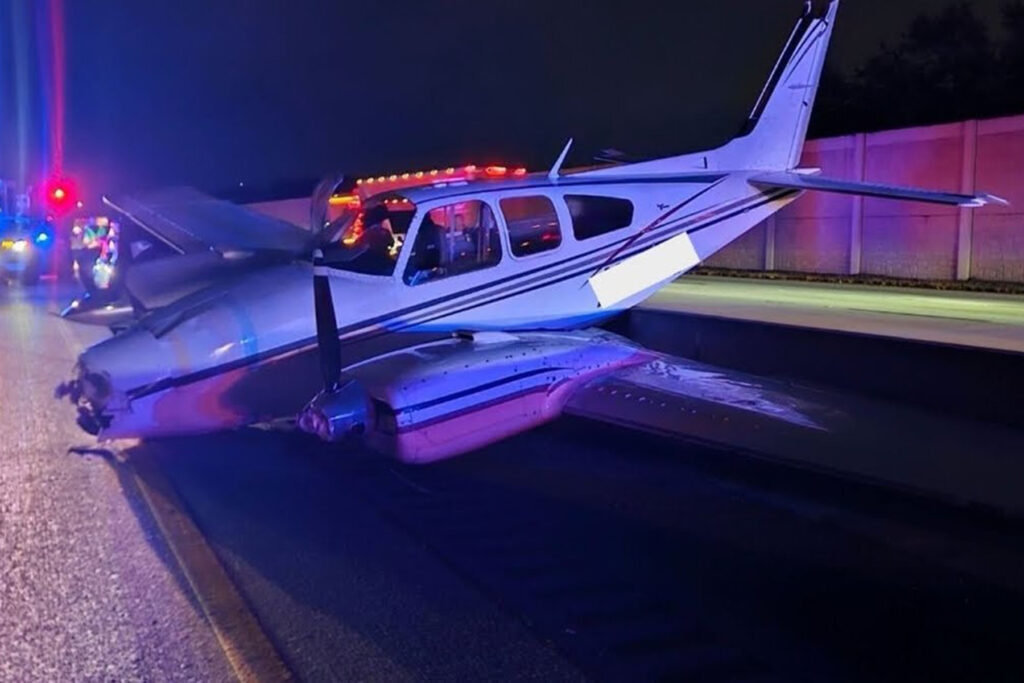

COCOA, FL – A routine afternoon flight turned into a dramatic emergency for two individuals aboard a small aircraft, culminating in a forced landing on one of Florida‘s busiest highways. The twin-engine plane struck a vehicle after touching down on Interstate 95, creating a startling scene for motorists and leading to a multi-agency investigation.
The incident occurred on December 8, 2025, near mile marker 201 in Cocoa, Florida. While the pilot and passenger of the aircraft were unharmed, the driver of the car sustained minor injuries. The event highlights the critical decisions pilots face during in-flight emergencies and the inherent risks of off-airport landings.
The Emergency Landing on Interstate 95
According to the Florida Highway Patrol (FHP), the incident unfolded around 5:45 PM local time. A 2023 Toyota Camry was traveling southbound in the inside lane of I-95 when it was suddenly struck by the descending Beechcraft airplane. The impact occurred as the pilot executed an emergency landing on the interstate.
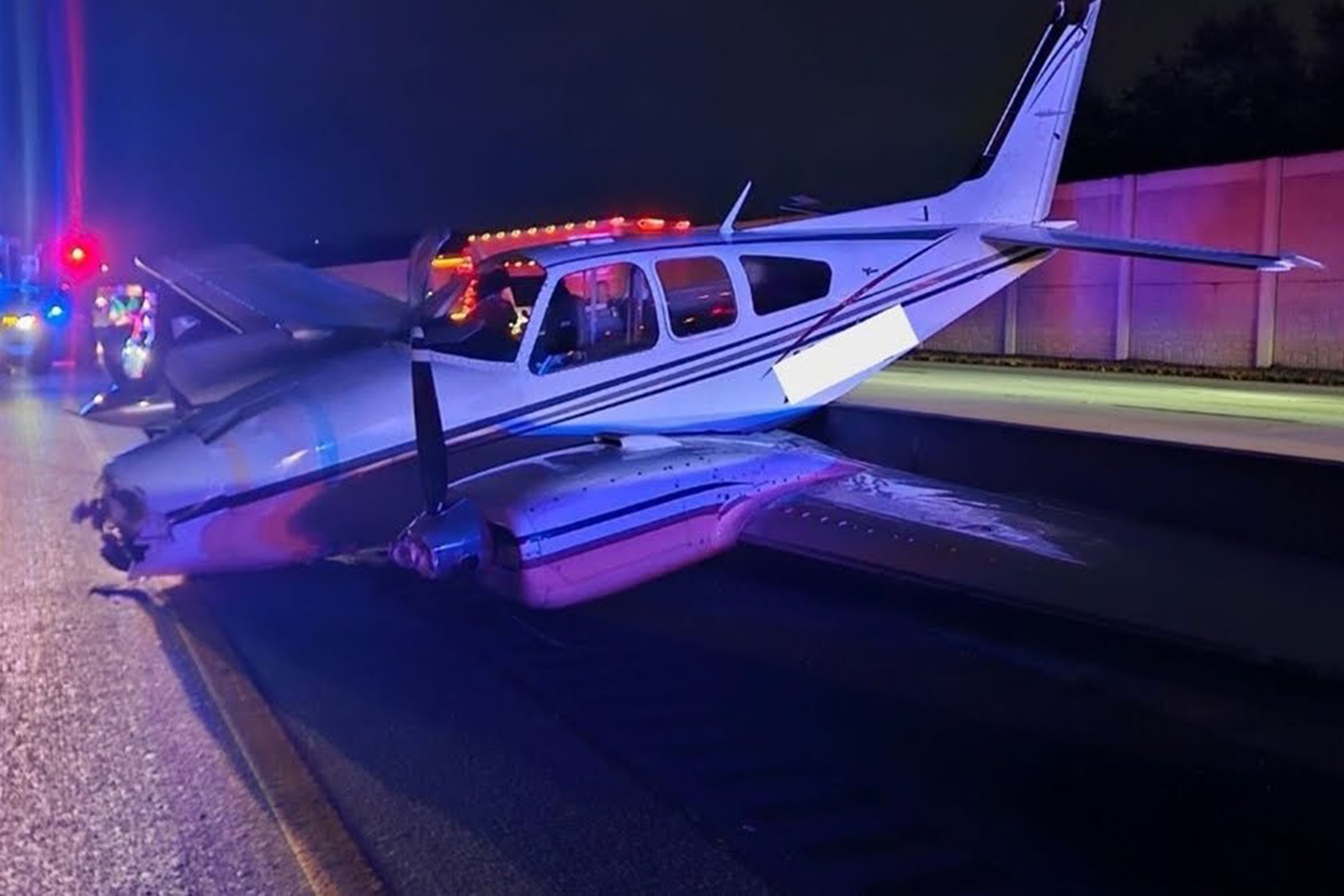
Dashcam and bystander videos, which quickly circulated on social media platforms, captured the aircraft’s final approach. The footage shows the plane descending steadily over the highway before making contact with the sedan in the adjacent lane. The controlled nature of the descent suggests the pilot was attempting to navigate the challenging environment of a live traffic artery.
First responders arrived promptly at the scene. The driver of the Toyota, a 57-year-old woman, was transported to a local hospital for treatment of minor injuries. Remarkably, the two occupants of the aircraft managed to walk away from the landing without injury, though the plane itself sustained significant damage.
Aircraft and Flight Details
The aircraft involved was a Beechcraft 95-C55 Baron, a light, twin-engine piston plane known for its reliability and performance. The plane, registered as N95KC, is operated by Tailwinds Flying. It is often used for flight training and personal transportation.
Data from flight tracking services indicates that the flight originated from Merritt Island Airport (KCOI), Florida, at 4:31 PM local time. The aircraft remained airborne for approximately one hour and nine minutes before the emergency landing. The flight path shows the plane operating near the area before the incident occurred.
Investigation into the Cause
The Federal Aviation Administration (FAA) has taken the lead in the investigation to determine the cause of the in-flight emergency. In a preliminary statement, the FAA noted that the pilot reported engine problems prior to the forced landing. The loss of power, particularly in a twin-engine aircraft, necessitates immediate action to find a suitable landing site.
The investigation will involve a thorough examination of the aircraft, including its engines, flight controls, and maintenance records. Investigators will also interview the pilot and passenger to gather firsthand accounts of the events leading up to the incident. The National Transportation Safety Board (NTSB) may also participate or take over the investigation, as is standard procedure for aviation accidents.
While the FAA focuses on the aviation aspect, the Florida Highway Patrol is conducting a separate investigation into the vehicle collision on the interstate. Their findings will address the traffic-related elements of the event.
Training for Off-Airport Landings
While landing an aircraft on a public highway is a rare and dangerous event, pilots are trained to handle such scenarios. During flight training, pilots practice engine-out emergencies and are taught to identify potential off-airport landing sites. The primary objective in these situations is to protect human life by maintaining control of the aircraft and landing in the safest manner possible.
Instructors often teach pilots to evaluate potential landing spots based on several criteria:
- Length and Width: The area must be long and wide enough to accommodate the aircraft’s landing roll.
- Surface Condition: The surface should be firm and as smooth as possible.
- Obstacles: The approach and landing path must be clear of obstructions like trees, power lines, and structures.
A highway can meet these criteria, but it introduces the dynamic and unpredictable variable of moving traffic, as well as potential obstacles like road signs, light poles, and overpasses. The pilot of the Beechcraft Baron had to navigate these challenges in real-time to execute the emergency landing. More information is expected to be released as the FAA and FHP continue their respective investigations. For official updates, you can refer to the Federal Aviation Administration’s website.