In a landmark move for South Korean aviation, Hanjin Group has announced that its entire portfolio of airlines, including flagship carrier Korean Air and its recent acquisition Asiana Airlines, will integrate Starlink’s advanced satellite internet. The decision marks the first adoption of the high-speed, low-latency service by any airline in South Korea, promising a transformative upgrade to the in-flight passenger experience.
The group’s holding company, Hanjin KAL, confirmed on December 5, 2025, that all five of its carriers—Korean Air, Asiana Airlines, Jin Air, Air Busan, and Air Seoul—will begin a phased rollout of the Starlink in-flight Wi-Fi service. The initiative is set to commence with testing and installation in late 2025, positioning the group to compete with other global carriers that have already embraced next-generation connectivity.
A New Era of Connectivity for South Korean Skies
The strategic decision to implement Starlink across the Hanjin Group’s fleets signals a major investment in passenger-centric technology. This move is expected to provide travelers with reliable, high-speed internet access from gate to gate, a feature that is rapidly becoming a key differentiator in the competitive airline industry.
Phased Rollout and Fleet-Specific Plans
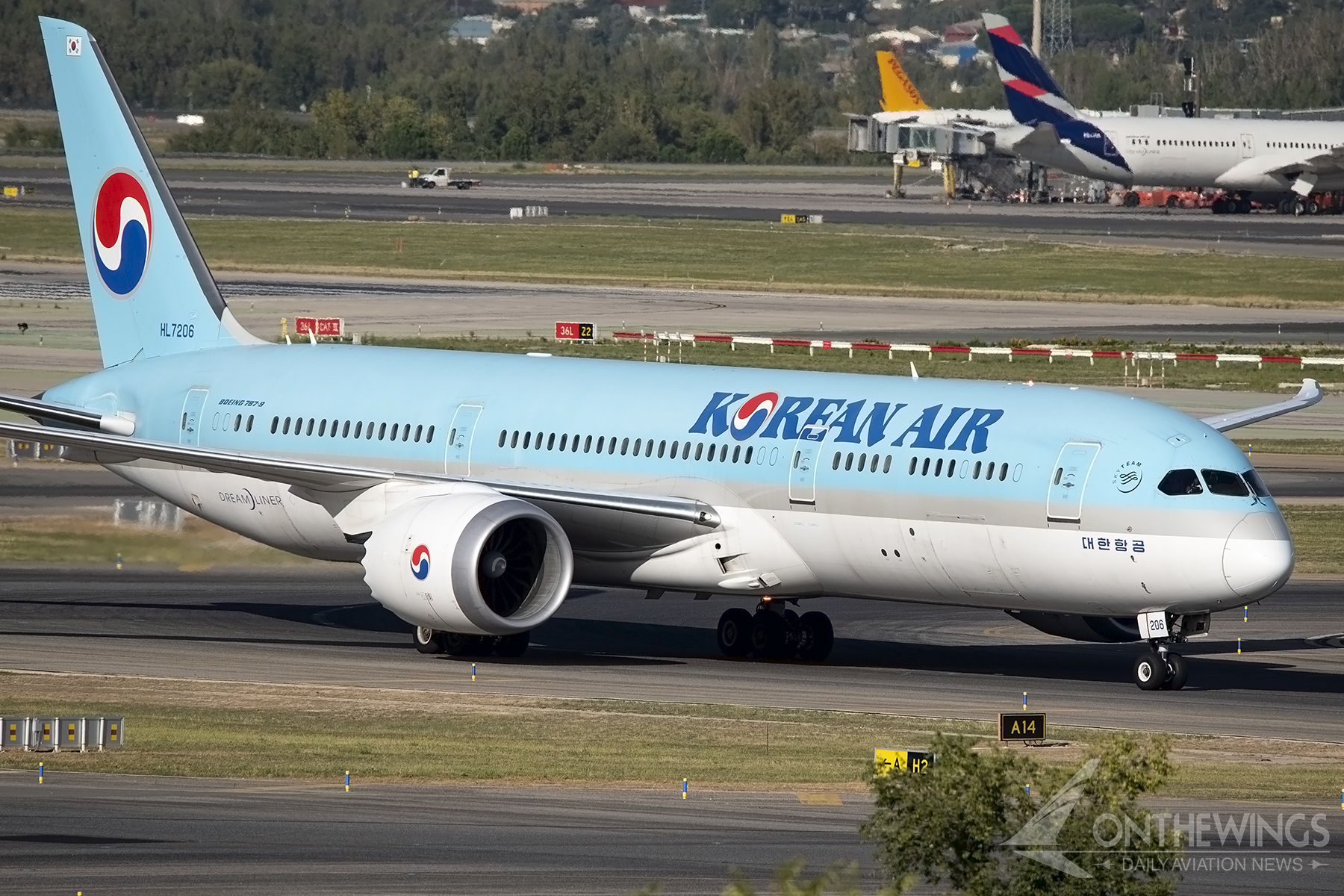
The implementation will be a carefully managed, multi-year process. Initial installation and testing are scheduled for the final weeks of 2025 in Korean Air airplanes. Passengers can expect the first Starlink-equipped flights to be operational as early as the third quarter of 2026.
Korean Air is targeting a full fleet-wide installation by the end of 2027. The initial phase will prioritize its long-haul aircraft, specifically the Boeing 777-300ER and Airbus A350-900 fleets, which serve premier international routes. Asiana Airlines will follow a similar strategy, upgrading its A350s and B777s first.
The group’s low-cost carriers will also see significant upgrades. Jin Air will begin by equipping its modern Boeing 737-8 aircraft, while Air Busan and Air Seoul are currently assessing their fleets to determine the most effective installation priorities. This comprehensive approach ensures that passengers across all of the group’s market segments will benefit from the enhanced service.
The Technological Leap with Starlink LEO Satellites
The adoption of Starlink represents a fundamental shift away from traditional in-flight Wi-Fi systems. Legacy services rely on ground-based towers or a small number of geostationary (GEO) satellites orbiting at altitudes of over 35,000 kilometers. This vast distance introduces significant signal delay, or latency, resulting in slow and often unreliable connections.
Starlink, operated by SpaceX, utilizes a vast constellation of over 8,000 Low Earth Orbit (LEO) satellites. These satellites operate at a much closer proximity to Earth, approximately 550 kilometers, drastically reducing latency and enabling a more responsive internet experience comparable to ground-based fiber optics.
Unprecedented Speeds for a Superior Passenger Experience
The technical advantages of Starlink are substantial in Korean Air fleet. The service is capable of delivering download speeds of up to 500 Mbps directly to the aircraft. This allows hundreds of passengers to simultaneously engage in high-bandwidth activities such as streaming movies, participating in video calls, playing online games, and accessing corporate VPNs without interruption.
A representative for Korean Air highlighted the importance of this upgrade, stating, “Connectivity is an essential part of the travel experience, and with Starlink, our customers will stay connected with fast and seamless internet.”
Strategic Implications Amidst Airline Consolidation
This group-wide technology upgrade is strategically timed, aligning with the final stages of the Korean Air and Asiana Airlines merger. After finalizing the acquisition in late 2024, Hanjin Group is working towards full integration by 2027, with the Asiana brand expected to be phased out by the end of 2026.
Deploying a single, cutting-edge Wi-Fi solution across all five airline brands creates a consistent and premium passenger experience. It also streamlines technical operations, maintenance, and service agreements, generating synergies that are crucial for the success of such a large-scale merger.
Joining a Global Trend Among Premier Carriers
By selecting Starlink, Hanjin Group joins a growing list of world-leading airlines that have embraced LEO satellite technology to enhance their in-flight offerings. This trend underscores a broader industry recognition of high-quality connectivity as a core component of modern air travel.
Other major airlines and airline groups that have announced partnerships with Starlink include:
- IAG Group: The parent company of British Airways, Iberia, Aer Lingus, and Vueling is equipping over 500 aircraft.
- Qatar Airways: Rolling out the service on its Boeing 777-300ER and Airbus A350 fleets.
- Hawaiian Airlines: The first major US airline to sign a deal for Starlink on its long-haul aircraft.
- airBaltic: Became the first European airline to launch the service.
- ZIPAIR: The Japan Airlines low-cost subsidiary offers the service for free.
The decision by Korean Air and its sister airlines to invest in Starlink in-flight Wi-Fi not only elevates their competitive standing in the Asia-Pacific region but also signals a definitive commitment to providing a technologically advanced and seamless journey for all their passengers.