
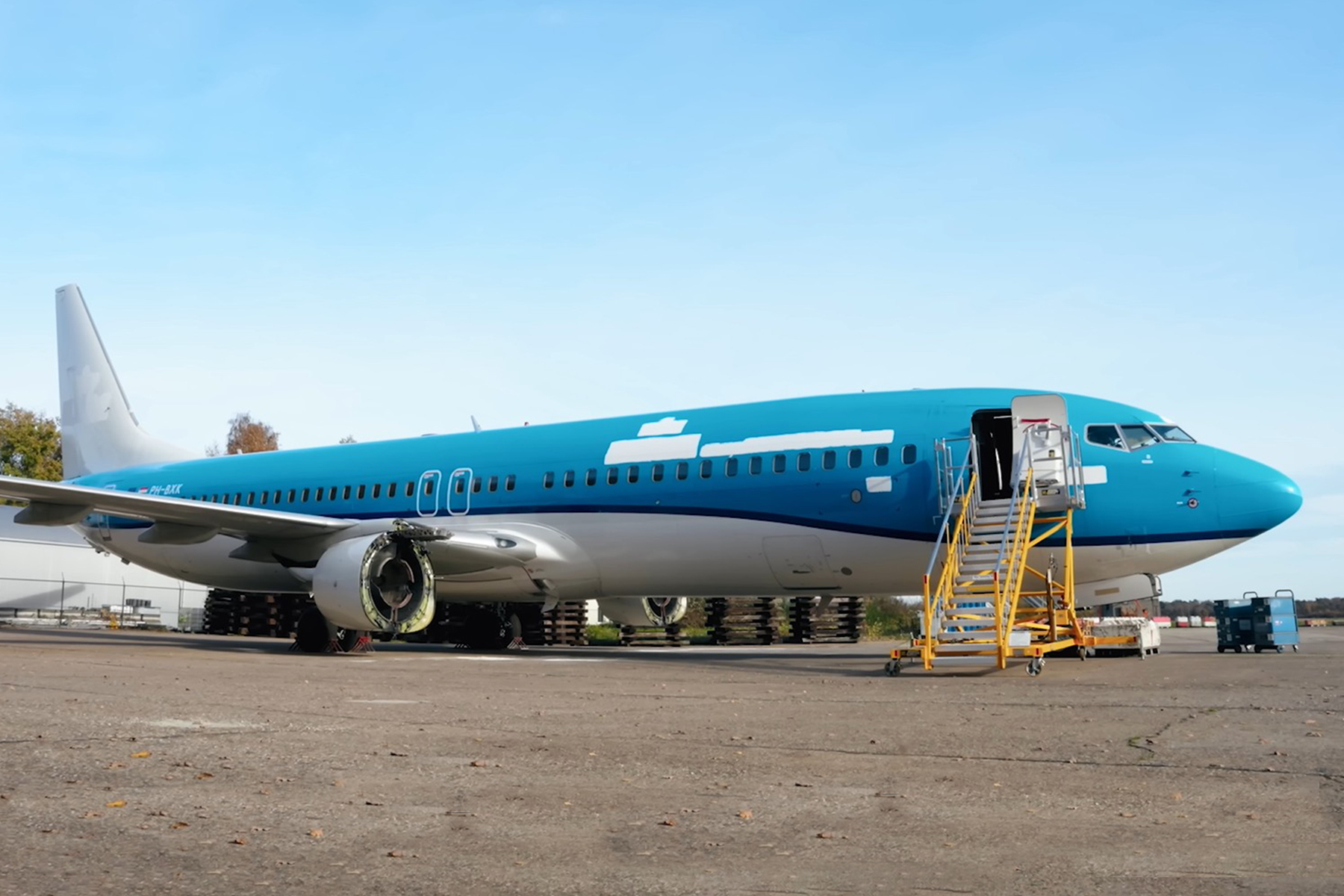
KLM Royal Dutch Airlines has officially begun phasing out its Boeing 737 Next Generation aircraft. The first to leave the fleet is a Boeing 737-800, registration PH-BXK, which completed its final commercial service before being ferried to the Twente Airport dismantling center. According to the airline, the aircraft’s engines and auxiliary power unit (APU) will be reused within the fleet, while the remaining components will be recycled or handled by specialized end-of-life partners.
Why KLM Is Retiring the 737-800
This move is part of an ambitious €7 billion fleet renewal program designed to modernize the airline’s short- and medium-haul aircraft, reduce fuel burn, lower CO₂ emissions, and meet increasingly strict environmental standards. With this strategy, KLM aims to transition from older Boeing 737NG models to the more efficient Airbus A321neo family.
The 737NG series has served the dutch airline for decades, but increasing operational costs, tighter sustainability requirements, and the introduction of new-generation aircraft have made their gradual retirement inevitable. The A321neo will improve fuel efficiency, introduce quieter operations, and provide better economics on dense European routes.
What Happened to PH-BXK — and What It Means for KLM’s Fleet
Aircraft PH-BXK operated its final commercial service out of Amsterdam Schiphol before being ferried to Twente Airport and handed over to AELS, a specialist in aircraft dismantling and recycling. Prior to the transfer, KLM Engineering removed the aircraft’s engines and APU, which will continue to support the active fleet. The remaining structures will be recycled or used as spare parts through AELS.
This retirement marks the beginning of a wider phase-out. KLM has already confirmed that another Boeing 737-800 will follow in January 2026, continuing the systematic withdrawal of the NG fleet.
Operational and Environmental Impact
Fleet renewal is key to reducing emissions, noise impact, and fuel costs. The Airbus A321neo, which will gradually replace the 737-800, offers up to 20% better fuel efficiency and significantly quieter takeoff and landing performance. This is especially relevant for Schiphol and other noise-sensitive European airports.
Operationally, introducing next-generation aircraft allows the airline to optimize maintenance schedules, improve reliability, and stay competitive in a market increasingly dominated by efficient, environmentally compliant fleets. At the same time, the airline is also modernizing its long-haul fleet, showing that the transformation extends beyond European routes.
The Road Ahead: KLM’s Long-Term Fleet Strategy
The retirement of the 737NG fleet is only one part of KLM’s long-term modernization strategy. On short- and medium-haul routes, the A321neo family will become the backbone of the operation. Regional services will also adopt newer aircraft, while the long-haul fleet will continue to transition toward more efficient wide-body models.
This shift is essential to meeting sustainability targets, maintaining cost competitiveness, and responding to growing passenger expectations regarding comfort and reliability. Fleet modernization also positions KLM strongly within the European aviation landscape, where environmental constraints and efficiency requirements are becoming stricter every year.
Conclusion: A Significant Milestone in KLM’s Modernization Era
The departure of PH-BXK marks a symbolic and practical turning point for the airline. The Boeing 737-800, a workhorse of European aviation for decades, now gives way to a new generation of cleaner, more efficient aircraft. While its engines will continue to fly, the airframe begins its final chapter through responsible recycling.
For aviation enthusiasts, this retirement represents the end of an era. For KLM, it is the first major step in a broad transformation that will shape the airline’s fleet — and sustainability credentials — for years to come. With the A321neo on the horizon, KLM is preparing for a future defined by efficiency, innovation, and environmental responsibility.